Commercial demolition
What a Tenant Improvement Demolition Scope Should Include
- Tenant improvement
- Scope of work
- Property managers
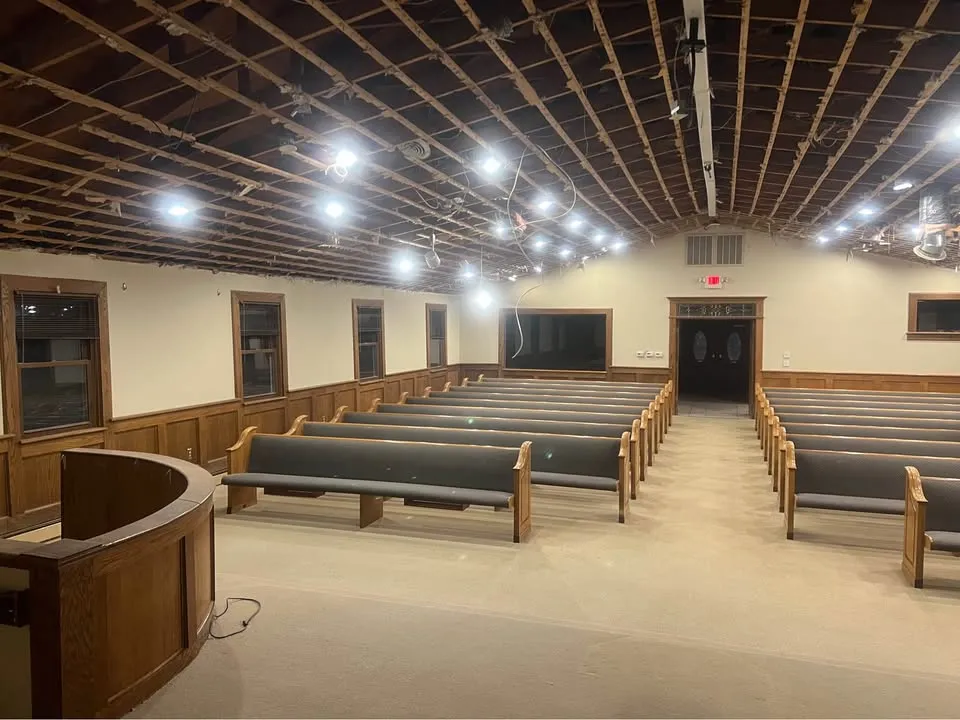
If you've ever had two demolition prices for the same unit that were miles apart, the scope was probably the reason. One contractor priced the ceiling grid staying, the other priced it going. One assumed the washrooms were coming out, the other didn't.
A good tenant improvement demolition scope stops that from happening. It's not a long document, but it has to be specific. Here's what it should cover, and why each piece matters when you're turning over a unit.
Start with a marked-up floor plan
Words alone don't work for demolition scopes. The clearest scopes start with a floor plan of the existing unit, marked up to show what comes out and what stays. If you have the new tenant's drawings, overlay them so you can see which walls, ceilings and rooms are reused.
Number each item on the plan and match it to a line in the written scope. That way, a contractor walking the unit can check the plan against what they see.
List every element as remove, protect, leave or salvage
Each line should identify the item and assign one of these four outcomes.
- Remove: taken out and hauled away
- Protect: stays in place and must not be damaged, like sprinkler heads, fire alarm devices and base building panels
- Leave: stays but isn't specially protected, like a concrete slab or exterior wall
- Salvage: removed carefully and set aside for the landlord or tenant
Be specific about ceilings, floors and walls
These three cause the most disagreements. For ceilings, say whether tile and grid both come out, and whether lighting and diffusers stay. For floors, say whether flooring comes up to the slab and whether adhesive or mastic must be removed or can stay for the flooring installer. For walls, mark which partitions come out and which are demising or fire separation walls that stay.
If a wall is structural, it isn't part of a normal TI demolition. That needs engineering and a permit, and it should be called out as its own item.
Include hazards and services
The scope should reference the Designated Substance Survey required under OHSA section 30 and say whether abatement is part of the demolition contract or done separately first. It should also say how services are left: electrical cut and made safe by an electrician, plumbing capped at the wall, ductwork removed back to the main or left in the ceiling.
If services feed neighbouring units, say so. Nobody wants to cut a line that keeps the dental office next door running.
Set the building rules and the handover
Occupied plazas and office buildings have rules. Put them in the scope so they're priced in: working hours within the City of Markham's noise by-law, loading times, elevator use, which doors debris leaves through and who arranges fire system impairments.
Then define done. A broom clean unit, capped and labelled services, intact protected items and a signed-off scope list is a fair standard for most TIs.
When it makes sense to bring in a professional
If the unit is small, the fit-out simple and you know the building well, you might write the scope yourself. Bring in a professional when there's asbestos in the survey, when structure or fire separations are affected, when services are shared with other units, or when the building stays open during the work. A demolition contractor who does commercial strip-outs regularly will usually walk the unit with you and help turn your notes into a scope that prices cleanly. If the scope also includes interior demolition of an older fit-out, ask them to flag suspect materials too.
Conclusion
A tenant improvement demolition scope doesn't need to be long, but it does need to be specific. Mark up the plan, list every element, call out hazards and services, and define the handover. At Siteforce Demolition Markham, we walk units with property managers and GCs to build scopes like this before we price. If you'd like us to look at yours, request a free estimate.
FAQ
Questions about this topic
- Should the landlord or tenant write the TI demolition scope?
- Whoever is commissioning the work, usually with input from the other party so base building items are protected.
- Does the scope need to mention asbestos?
- Yes. It should reference the Designated Substance Survey and say whether abatement is included or done separately.
- What is a demising wall?
- The wall between two units. It often serves as a fire separation and usually stays unless the landlord approves a change.
- How detailed should the handover standard be?
- Enough that both sides agree on done. Broom clean, services capped and labelled, and protected items intact is a common baseline.
Planning references
Confirm the current requirements for your scope with the relevant authority before arranging work.
Continue planning
Compare like-for-like enquiry quantities
| Illustrative scope line | Describe without inventing concealed quantities |
|---|---|
| Floor covering | Reviewed floor area, rooms and intended stopping layer |
| Wall finishes | The affected faces, retained sides and known build-up |
| Fixed fixtures | Counted, labelled items with ownership and service interfaces |
| Retained area | Boundary and the conditions it must keep |
| Unknown layer | Evidence needed before it becomes an accepted removal quantity |
Professional measurements and concealed quantities remain to be confirmed. This table is a planning example, not a measured schedule.
Separate an allowance, exclusion and alternative
An unresolved floor layer can be identified as an assumption requiring investigation. A supplier-owned display can be excluded for separate collection. Retaining an existing meeting room can be compared as an alternative to a wider strip-out. State the evidence and authorised decision needed for each; none should disappear into a generic demolition line.
Give bidders the same physical package
Issue the same drawing revision, retained-item list and receiving conditions. Ask each response to identify included removals, exclusions, assumptions and the person responsible for resolving open interfaces. Compare the responses against those rows before treating them as equivalent. This is an unpriced enquiry comparison, not contract or legal advice.