Industrial demolition
Handling Abandoned Services in Older Industrial Units
- Industrial units
- Services
- Safety
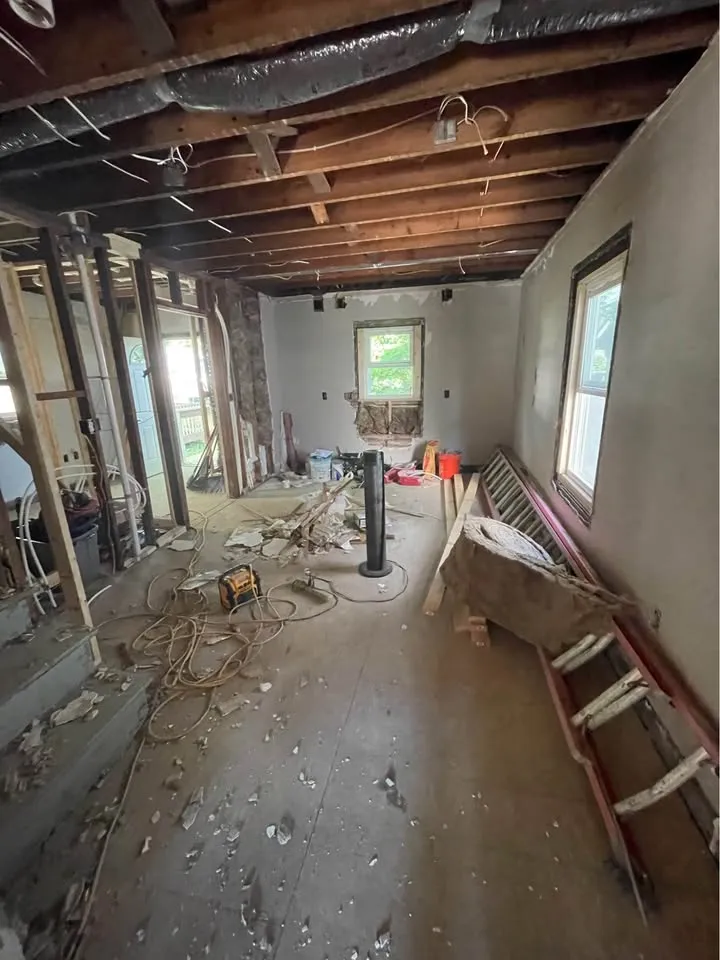
Walk through an older industrial unit and look up. You'll probably see conduit that goes nowhere, air lines capped with tape, a gas drop over an empty corner and a drain that used to serve a machine that left years ago.
Those are abandoned services, and they're one of the most common hazards in industrial demolition. Here's how they're handled so nobody gets a nasty surprise.
Treat everything as live
The golden rule is simple: an unlabelled line is live until someone qualified proves it isn't. Previous tenants and trades don't always disconnect things at the source. A conduit that looks abandoned can still be fed from a panel two units over.
Trace before you cut
Each type of service needs the right trade to trace and confirm it.
- Electrical: an electrician traces circuits back to the panel, disconnects at the source and confirms dead
- Gas: a licensed gas technician isolates and caps lines at the meter or supply
- Compressed air: lines are depressurized and valved off before removal
- Water and drains: supply is shut and capped, drains plugged or capped so sewer gas can't enter
- Sprinkler branches: handled only through the building owner's fire protection contractor
Label as you go
Once a service is confirmed safe, label it. Once it's capped and meant to stay for the next tenant, label that too. A clear label saves the next trade from repeating the whole process, and it's the easiest way to show the landlord what's been done.
Watch for hidden hazards
Old services come with old materials. Pipe insulation in older buildings can contain asbestos, and paint on old conduit and steel can contain lead. The Designated Substance Survey required under OHSA section 30 should cover these. If you find insulation or coatings the survey doesn't mention, stop and get them tested. Asbestos work follows O. Reg. 278/05.
Drains and trenches from past processes can hold oils or chemicals, and those need proper disposal.
Remove what the next tenant doesn't need
Once services are proven dead, the ones nobody needs can come out: conduit, wire, air piping, supports and old hangers. That clears the ceiling for the next tenant's layout and removes things that could be mistaken for live services later. Steel and copper go for recycling.
Keep a simple record
When the work's done, leave the landlord a record of which services were disconnected, where they were capped, what was removed and what was left for the next tenant. Include the responsible trade's confirmations, a marked-up plan, photographs and any unresolved items. Those records help later trades understand the previous work, but they do not replace current tracing and verification before a service is disturbed again.
When it makes sense to bring in a professional
Always for electrical and gas; those need licensed trades by law. For the removal side, bring in a demolition contractor when the unit has a lot of old services, when services are shared with neighbouring units, or when there's a survey showing hazardous materials. Someone who does commercial strip-outs regularly will know to coordinate the trades before cutting. If the unit's office needs interior demolition too, the same crew can handle both.
Keep a disconnection handover record
Use a location label, service description, responsible trade, confirmation reference and stated endpoint for each released item. Distinguish an appointment from completed work and identify anything still unverified. If labels do not match the condition found, pause the affected work and refer the question to the responsible trade. An unused appearance, an old tag or a photograph alone is not confirmation that a connection is safe to disturb.
Conclusion
An abandoned-looking service may still be live or connected elsewhere. Have the appropriate trade assess, trace and confirm the required make-safe work before affected removal, then record and label what remains. Siteforce Demolition Markham clears older industrial units across York Region with that order in mind. If you've got a unit to turn over, request a free estimate.
FAQ
Questions about this topic
- Can a demolition crew disconnect electrical services?
- Electrical disconnection must be done by a licensed electrician. The demolition crew removes the material once it's confirmed dead.
- Who caps a gas line in an industrial unit?
- A licensed gas technician isolates and caps gas lines.
- Why plug old drains?
- Open drains can let sewer gas into the unit and can be a route for debris or chemicals to enter the sewer.
- Can old conduit be recycled?
- Yes. Steel conduit and copper wire are commonly separated and recycled.
- What if a line can't be traced to its source?
- Treat it as live and leave it in place until a qualified trade confirms it. Cutting an untraced line is never worth the time it saves.
Planning references
Confirm the current requirements for your scope with the relevant authority before arranging work.