Question guide
How is an industrial unit cleared and made ready for a new tenant?
- Industrial units
- Tenant turnover
- York Region
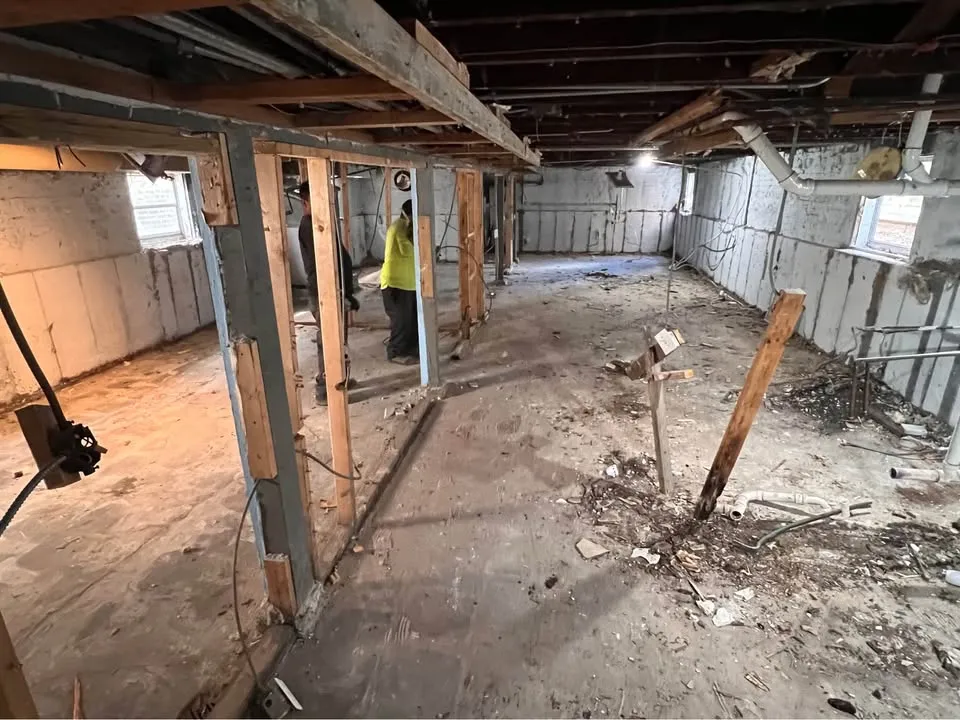
An industrial unit is made ready for a new tenant by removing the previous tenant's equipment, racking, office build-out and abandoned services, then repairing and cleaning the slab so the space matches what the lease promises. The order is usually hazards first, then equipment, then fit-out, then services and the floor.
What is required depends on the lease's restoration clauses, what the previous tenant left and what the new tenant plans to install.
Start with the lease and a walkthrough
The lease usually says whether the outgoing tenant must remove its improvements and restore the unit. If they did not, the landlord inherits the job. A walkthrough with the landlord, and ideally the incoming tenant, identifies what stays, such as base building lighting, dock doors and washrooms, and what goes.
Deal with hazards first
Industrial units can hold more than old ceiling tile. The Designated Substance Survey required under OHSA section 30 should cover the building materials, and the owner should also know about process residues, oils, chemicals and anything stored in drums or tanks. Asbestos work follows O. Reg. 278/05. Chemicals and waste the previous tenant left must go to licensed carriers and facilities.
Remove equipment and racking
Pallet racking, conveyors, spray booths, compressors and mezzanines are taken apart in a planned order. Racking anchors are cut or pulled from the slab. Anything with services, such as compressors, booths and exhaust fans, is isolated by the appropriate trade before it is disconnected.
- Racking dismantled and removed, anchors cut flush
- Mezzanines assessed before dismantling, since some are structural
- Equipment with gas, power or air isolated before removal
- Salvageable steel separated for recycling
Strip the office and fit-out
Front office areas often have partitions, ceilings, flooring and washrooms added by past tenants. These come out as in any commercial strip-out, with base building items protected. In older units, suspended ceilings and floor tile are common places to find asbestos, which is why the survey comes first.
Handle abandoned services
Previous tenants often leave power drops, air lines, gas lines and drains that no longer serve anything. Each is traced and made safe by the right trade: electrical disconnected at the source by an electrician, gas capped by a licensed gas technician, drains plugged or capped. Unlabelled lines should be treated as live until proven otherwise.
Repair and clean the slab
Once the unit is empty, anchor holes, trenches and damaged areas in the slab are filled or repaired and the floor is cleaned. The goal is a floor the new tenant can mark, rack or coat without starting with repairs.
Coordinate with the incoming tenant
If the next tenant is already signed, bring them into the conversation early. Their plans can change what is worth removing. A tenant who plans to rack the whole floor may want existing anchors cut flush and holes filled to a specific product, while a tenant installing a coated floor may need the slab ground and cleaned to a higher standard. A tenant keeping the office area may want its partitions left. Agreeing this before clearing starts avoids removing something that has to be rebuilt a month later, or leaving something the new tenant then pays to take out. The landlord's leasing agent is usually the best person to connect the parties.
What we do about it
We clear industrial units in the order described here, starting with the survey and the lease, and ending with a swept floor and labelled services. We coordinate licensed trades for isolation and do not cut unknown lines. See how we approach commercial strip-outs and concrete removal, or request a free estimate.
FAQ
Questions about this topic
- Who pays to clear an industrial unit between tenants?
- It depends on the lease. Many leases require the outgoing tenant to restore the unit, and if they do not, the landlord often recovers the cost.
- Are mezzanines removed like racking?
- Some are freestanding and come apart like racking. Others are structural and need review before removal. Check drawings or ask an engineer.
- What happens to chemicals left behind?
- They are handled by licensed waste carriers and taken to approved facilities, not mixed with demolition debris.
- Do anchor holes in the slab need to be repaired?
- Usually yes, so the new tenant can install racking or coatings. The lease may set the standard the floor must meet.
Planning references
Confirm the current requirements for your scope with the relevant authority before arranging work.
Continue planning
Keep a useful office as an explicit option
A new tenant may retain a useful staff or office area while removing obsolete warehouse fit-out. Mark the retained rooms and compare their floor, ceiling and service interfaces with the proposed layout. This is different from the current occupier's staff-area renovation. Equipment relocation and process isolation require their responsible specialists; neither follows automatically from a unit-clearance request.