Question guide
What does the City of Markham require before demolishing a commercial or industrial unit?
- Markham permits
- Commercial demolition
- OHSA
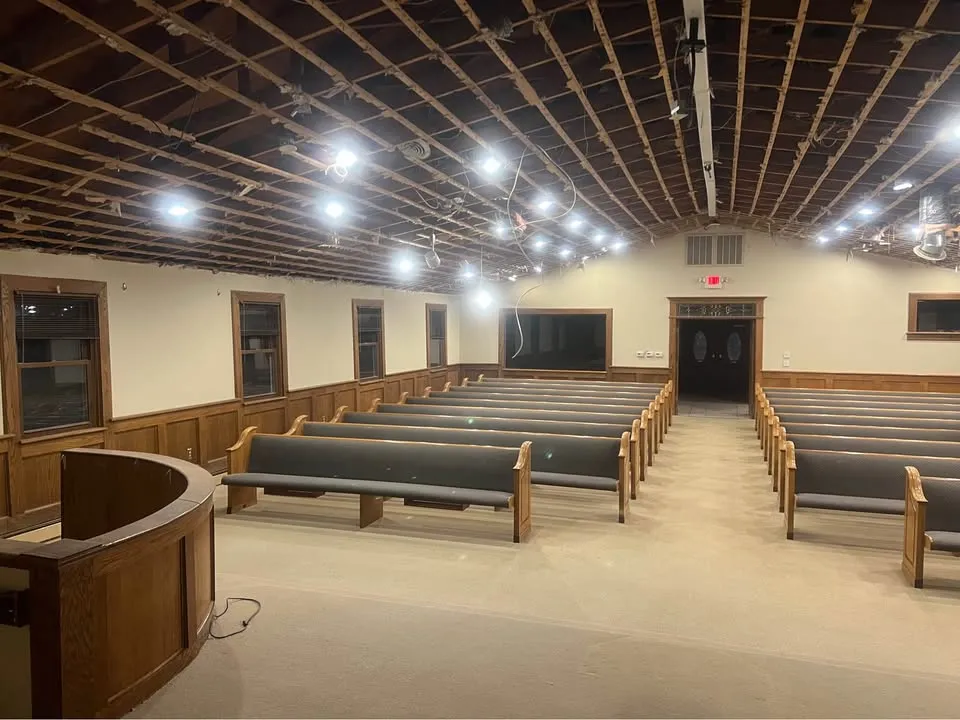
Before a commercial or industrial unit in Markham is demolished, you generally need the right City permit for the scope, a Designated Substance Survey under OHSA section 30, confirmed utility isolation and, on larger projects, a Notice of Project to the Ministry of Labour. What applies to your unit depends on whether the work is interior only, whether it touches structure or life safety systems, and whether the whole building is coming down.
This guide walks through each requirement in the order most projects meet them, and points out where the answer changes with the situation.
Start by defining the scope
The City treats three kinds of work differently. Removing interior finishes and non-structural partitions in a unit is one. Altering structure, fire separations, exits or life safety systems is another. Demolishing a whole building is a third. Most of the permit question follows from which of these you are doing, so write the scope down before calling anyone.
For a tenant improvement where the old fit-out is removed and a new one built, the interior demolition is often reviewed as part of the building permit for the new work. For a whole building, a demolition permit is needed.
Permits from City of Markham Building Standards
A demolition permit is required under the Building Code Act to demolish a building in Markham. The application normally asks for site information, the owner's authorization and confirmation that services have been disconnected. Work that changes structure, fire separations or means of egress inside a unit needs a building permit, usually with drawings from a designer or engineer.
Because requirements can change and depend on the building, confirm your specific scope with Markham Building Standards before tendering the work. Heritage designated properties and properties in heritage conservation districts, such as parts of Markham Village, Unionville and Thornhill, have additional review.
- Whole building: demolition permit
- Structural, fire separation or exit changes: building permit with drawings
- Finish removal only: often covered by the permit for the new fit-out, confirm with the City
The Designated Substance Survey
Ontario's Occupational Health and Safety Act, section 30, requires the owner to determine whether designated substances such as asbestos, lead, mercury and silica are present at the project site, and to list them in the tender documents before the work is tendered. Asbestos work on the project then follows O. Reg. 278/05.
In an industrial unit the survey should also note process residues, old equipment and anything the previous tenant left behind. The survey is the owner's duty, not the demolition contractor's, although a good contractor will ask for it before quoting.
Utility and service isolation
Gas, hydro and water must be safely isolated before demolition. For a whole building, the utilities (Enbridge Gas, Alectra Utilities and the City's water services) confirm disconnection, and the permit application needs that confirmation. For a unit inside a larger building, the landlord's base building trades usually isolate and cap services at the unit so the neighbouring tenants stay live.
Sprinkler and fire alarm impairments are arranged through the building owner and their fire protection contractor, with fire watch where required.
Notice of Project and the Ministry of Labour
Under O. Reg. 213/91, the constructor must file a Notice of Project with the Ministry of Labour, Immigration, Training and Skills Development before starting certain projects, including those where the expected cost of labour and materials exceeds the threshold set in the regulation and some demolition of structures. Asbestos work classed as Type 3 also requires notice. Whether your project meets the threshold is a question for the constructor to confirm before work begins.
Noise, hours and the neighbours
Markham's noise by-law limits when construction equipment can be used. Loud work is normally kept to daytime hours on weekdays and shorter hours on Saturdays, with Sundays and statutory holidays excluded unless the City grants an exemption. In a plaza or industrial condo, the property manager will usually add rules for loading, deliveries and shared corridors.
What we do about it
When you call us about a commercial or industrial unit, we start by writing the scope with you so the permit question is clear. We ask for the Designated Substance Survey before quoting, work with the landlord on service isolation and fire system impairments, and plan loud work inside the City's hours. If a permit or notice is needed and not yet in hand, we say so plainly. You can read how we approach commercial strip-outs and structural demolition, or request a free estimate for your unit.
FAQ
Questions about this topic
- Is a demolition permit needed for an interior strip-out in Markham?
- Not always. Finish removal is often reviewed with the permit for the new fit-out, while structural or life safety changes need a building permit. Confirm your scope with Markham Building Standards.
- Who orders the Designated Substance Survey?
- The owner, under OHSA section 30. On a leased unit that may be the landlord or the tenant, depending on who is commissioning the work.
- Does every project need a Notice of Project?
- No. It applies to projects that meet the thresholds and categories in O. Reg. 213/91. The constructor confirms this before work starts.
- Can demolition happen on a Sunday in Markham?
- Noisy construction work is generally not permitted on Sundays or statutory holidays without a noise exemption from the City.
Planning references
Confirm the current requirements for your scope with the relevant authority before arranging work.